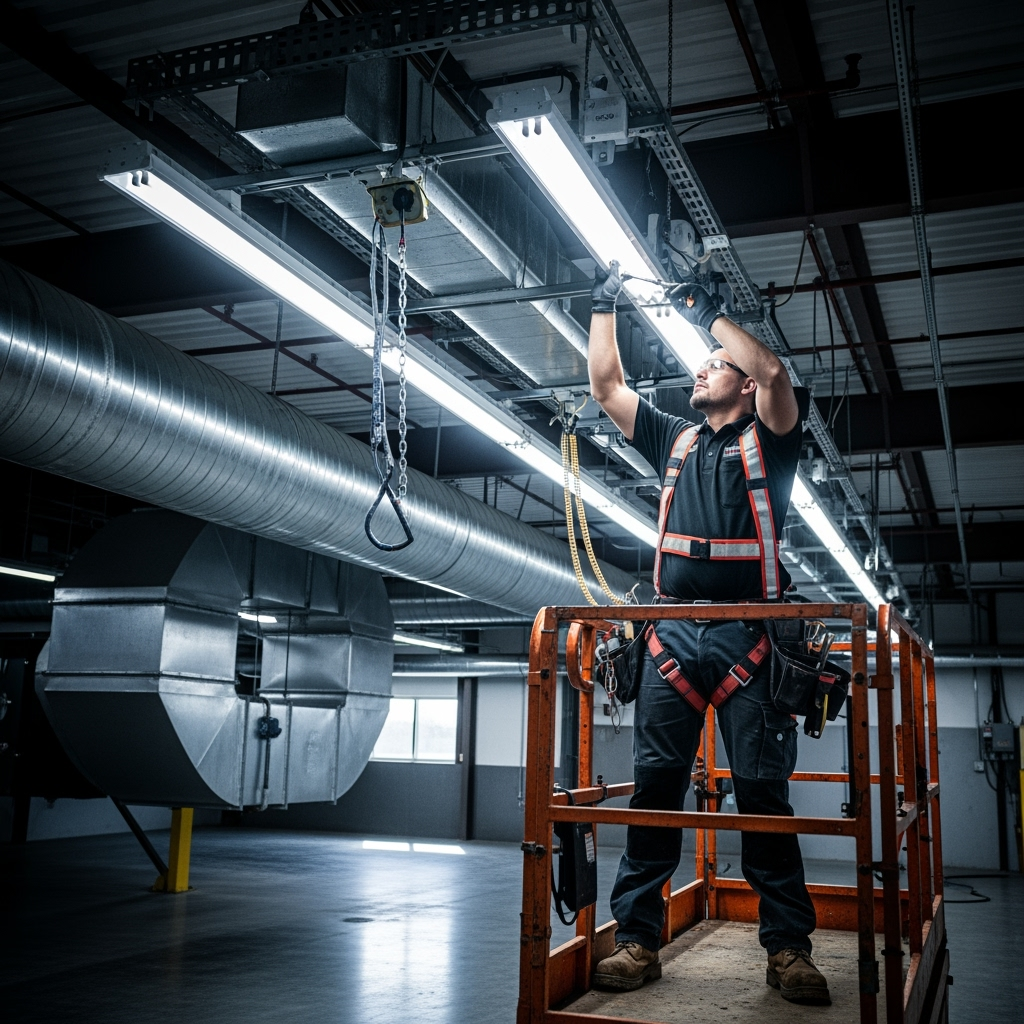
When you run or manage a production floor, warehouse, or cold storage facility, lighting is more than a bulb—it drives safety, productivity, and operating cost. If you’re researching industrial lighting in Wisconsin for a retrofit or new build, you’ll want solutions that work through our long winters and bright summers. The U.S. Department of Energy highlights that lighting upgrades are one of the fastest ways to reduce commercial energy costs and carbon output, which makes smart lighting a practical place to start.
Why industrial lighting matters in this area
In the Sun Prairie and greater Madison area, industrial lighting decisions affect employee safety, equipment uptime, and compliance with local codes. Poor lighting can slow assembly lines, contribute to mistakes, and increase workplace incidents. At the same time, the region’s variable daylight means facilities need flexible controls that adapt to early winter mornings and long summer evenings. Choosing the right fixtures and controls reduces energy bills and helps facilities hit sustainability targets while improving working conditions.
Common industrial lighting challenges
Most facilities I visit share similar problems: outdated high-intensity discharge fixtures that take time to warm, uneven illumination that creates shadowed work zones, and lighting systems that run on fixed schedules instead of responding to real conditions. Maintenance can be disruptive in tall warehouses, and the costs pile up when fixtures need frequent replacement or ballast repairs. Add to that the rising focus on energy efficiency, and you have a strong business case for an upgrade.
Trend 1: Smart LED systems
LED technology has matured beyond simple lamp swaps. Today’s LED systems combine efficient fixtures with sensors, networked controls, and analytics. These systems support daylight harvesting, occupancy sensing, and task-level dimming so you only light the areas you need. The result is measurable energy savings and, in many cases, better light quality for tasks like inspection and packing.
Trend 2: Incentives and standards
Utilities and state programs increasingly offer rebates for energy-saving retrofits, and building codes are moving toward stricter energy performance. Those incentives can push payback timelines shorter and make a compelling financial argument for upgrades. When I plan projects around here, I always factor possible rebates and local code updates into the timeline and budget to avoid surprises.
How I approach a lighting upgrade project
A good upgrade starts with a clear plan. I like to break the work into these practical steps so stakeholders can see costs and benefits before a single fixture is changed.
- Assess the facility. Measure existing light levels, identify high-risk areas, and document fixture types and mounting heights.
- Set objectives. Decide whether the priority is energy reduction, safety, color rendering for inspection tasks, or reduced maintenance.
- Model and select equipment. Use lighting calculations to choose lumen packages, beam patterns, and control strategies that match tasks and mounting heights.
- Plan phasing and installation. Choose a phased approach that keeps operations moving and schedules retrofits during low-production windows.
Picking fixtures and controls that work
Not all LEDs are equal. For industrial use you need fixtures rated for the environment and matched to the work. Look for appropriate lumen output for the space, beam spread for your racking and task zones, and a color temperature that suits the work being performed. For most production and warehouse tasks in this region, a neutral white (4000K) with a Color Rendering Index (CRI) of 80 or higher works well. Hazardous locations, cold storage, and washdown areas require specialized housings and certifications, so specify those early.
Controls are where you really realize savings. Networked lighting controls allow manual overrides, scheduling, occupancy detection, daylight dimming, and analytics. When integrated with a building management system, the lighting can respond to production schedules and even feed data for predictive maintenance.
Maintenance and lifecycle cost planning
When you evaluate a lighting project, look beyond upfront fixture costs. Calculate total cost of ownership: energy consumption, expected life, maintenance labor, and disposal. LEDs typically cut energy use by 50 percent or more versus older HID fixtures. They also last longer and reduce ladder time and service costs. A realistic payback for many industrial retrofits in this region is two to five years, depending on hours of operation, energy rates, and any available incentives.
Example upgrade scenario that makes sense locally
Imagine a 60,000 square-foot distribution center in Dane County that still uses metal halide high bays. Replacing those with modern LED high bays, adding occupancy sensors in low-traffic aisles, and tying dimming controls to natural light near loading doors can slash the lighting load dramatically. In addition to energy savings, the facility sees fewer quality issues because color rendering and uniformity improve in packing and inspection areas. For many operators I work with, the quieter, cooler lighting environment also improves morale and reduces turnover over time.
Practical tips to maximize value
From my experience, small planning choices make a big difference when it’s time to install and operate new lighting. These quick tips help you get the most from a project:
- Match beam patterns to the space to avoid over-lighting aisles or under-lighting storage racks.
- Prioritize controls in low-use areas first to prove ROI quickly and fund broader phases.
- Document baseline energy use and lighting levels so you can measure savings after installation.
- Check for utility rebates early and stack them into your return calculations to shorten payback.
Addressing common objections and pain points
Managers often worry about disruption, upfront cost, and whether LEDs will perform as promised. You can reduce these concerns by choosing a phased installation, scheduling work during off-hours, and insisting on performance guarantees and measurement verification. Ask installers for a lighting plan that shows expected lux levels and energy use so you have verifiable targets. Many reputable contractors also offer trial installations in a portion of the facility so you can test light quality and controls before committing to a full rollout.
Trends to watch and what they mean for your facility
Two trends deserve extra attention. The first is the rising intelligence of lighting systems. When you combine LED fixtures with sensors and analytics, you can identify underused areas, spot anomalies like lights failing early, and tie lighting events to production schedules. The second trend is an increasing emphasis on verification: utilities and auditors want to see metered savings and before/after measurements. If you’re planning a major upgrade, build measurement and verification into the scope so your savings are documented and rebate applications are supported.
Getting started in Sun Prairie and surrounding areas
If you’re in Sun Prairie, Madison, or elsewhere in Dane County, start with a no-nonsense audit that measures actual conditions. Walk the site during different shift times and note lighting-related safety or quality issues. From there, form a scope that matches your budget and timeline. Early engagement with a contractor who understands local codes and can suggest phased installs will avoid surprises. Also, ask about mounting alternatives and surge protection—Wisconsin weather and nearby operations can expose fixtures to electrical disturbances.
Final thoughts and next steps
Industrial lighting in Wisconsin is an opportunity to cut costs, improve safety, and upgrade workplace conditions without major disruption when planned thoughtfully. Begin with an audit, set clear objectives, and choose fixtures and controls that match your tasks and environment. With available incentives and modern LED systems, many facilities see quick paybacks and long-term gains.
If you want help turning a lighting plan into results, contact Nextech to discuss assessments, retrofit planning, and turnkey installation services in this area.